Wednesday, 12 February 2014
Lyndon's choice of Sacred Architectre.
Cusco was the navel of the Inca empire, their capital city and so it stands to reason that their most grand lavish sacred, scientific and argricultural architectures were located around this area. The name of the area is the "Sacred valley" named because of the lush green, vast and spectacular valley they are all sited within.
Pisac
Pisac is still home to a little village which boasts a famous market, packed mostly with more tourist stuff we didnt want, and also the ruins of a large Incan farming community. The ruins are set at the top a of small green mountinside, as you enter into the site you are greeted firstly with the sight of countless Terraces, stetching on and on, caped at the top with a small group of pitch roof stone buildings, far in the distance. The Terraces were created to strengthen the mountain preventing very common mudslide and also to create a flat workable surface to farm on. After a strainous 45min walk we made it up the vast stone stair cases to the top and found our way even higher as we climbed through the rough and rugged quarry remains. Here we found a breathtaking view out over the Andean countryside and an apprecation for the scale of the terraces which stretched out in two directions for miles. This was not a religious site so the stone work was much more rough and less precious but still left you wondering how people without any knowledge of metalurgy could have fashioned such a complex.
Moray
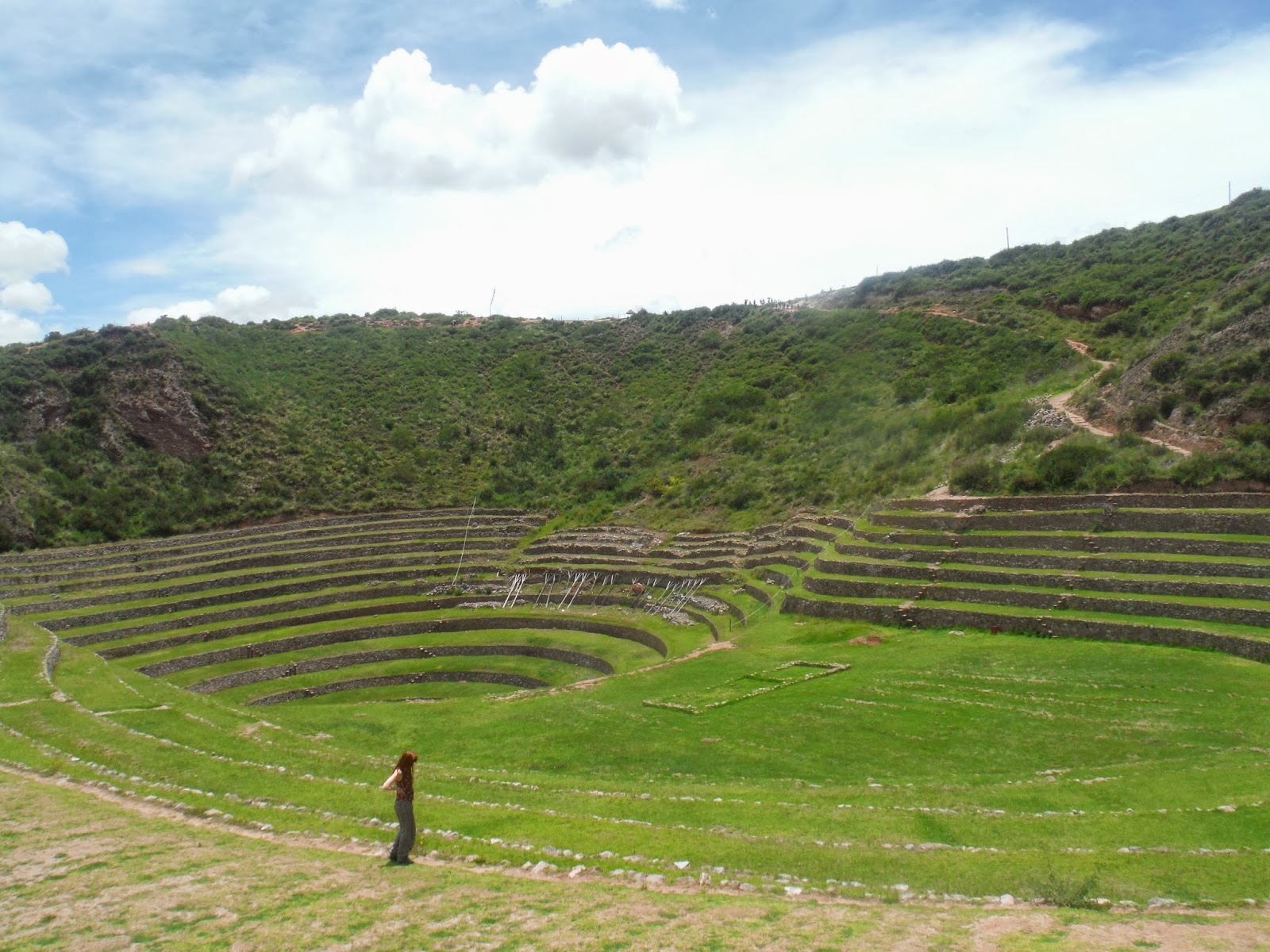
Moray was for me one of the most spectacular places architectularly, for me even more so than Machu Picchu. Thats not to say that Machu Picchu's construction was not far more impressive or that the location was better than Machu, which it was not , but only to say that circular oraganic shape it took was far more astheatically pleasing and mystifying. This site consisted again of mainly terraces like most of the site, but the main difference being they descended down into the ground rather than ascended up into the mountians. The thing which is most imperessive and which scientists still can't provide a reason for is the fact the site doesn't flood. The terraces sink down deep below the level of the surronding area, and with the high rain fall in the area, land often becomes boggy and swampy during rainy season which would mean the site should almost certainly be prone to flooding at this time of year, yet some how the inca's managed to create an underground water run of system that still works to day and has not been found. The use of the site arciologists claim was a sort of laboritory where the incas where able to replicate the temperatures of many different (almost all) regions of Peru. The stepped terraces descended down around 1.5 meters at a time and aswell as descening by about 2 degrees at a time, which meant that with soil from different regions brought in and a precise temperature control system the whole of moray was an area for breeding and developing crops to grow in certain regions, leading to the domestication of the potato (peru has over 400 different types). If this reason if true it is extremly impessive for a ciliviation without written language, the precise science alone as well as the logistics of bringing tons upon tons of soil from hundreds and hundeds of miles away which has been proven to be the case.
Ollantaytambo
The ruins here were a mixture of sacred and argricultural so it was interesting to see the diference between the stone work so close together for comparison. The temples are constructed using extremely precisely cut, impossible looking three dimesional interlocking stonework, creating complex and beautiful architecture that interacted in even more complex ways with the sun at different times of year, creating shadows of jaguar heads and other spectacular things. some of these stones creating the walls of the main "tempel of the sun" were 12 feet high 5 foot wide and deep with carved shapes, dragged supposedly from miles away up and down vast mountain ranges, it seemed ludicrous the guide told us this with complete conviction, as it is clearly impossible this happened. The farming section if not quite grand was still extremely impressive with much more rugged stone work but equally as impessive contruction. A huge complexe of storage building high up the side of a facing mountain to the farming terraces, located in such a rediculously awkward place because it is much cooler that the sun rich land used for farming.
After leaving here we were taken to one of the many traditional andean markets again but this time in a small enclosed space and given a 10 minute scripted lecture (same script we had heard 5 times) on how the fabrics are made. The first time it was really interesting, they explain how the fabrics are cleaned and died with natural plant material and then a demonstarition of how they made using a bone to stich the fabric, and they ask if we know what the bone it is, to which the answer is always 'the bone of the tourist that didnt buy anything'. By the 5th time however our laughs were shallow and fake and the line was delivered with zero charisma. Needless to say we didn't buy anything and fled before we could be the next victim.
Salt mines.
The salt mines were incredible, when two tectonic plates 100s of thousands of years ago crashed together they pushed vast salt deposits up into the heavens, where now a stream runs through and extracts the salt contains twice the salt content of sea water and a hundred times more minerals including magnisium and potasium, and draws it down into these mines. When i say mines they are not what you'd think they are, they are huge number of small and thin cannals that pull the water into a vast complex of flat pools in ledges where the water is held to be evoporated by the sun leaving behind the salt. The salt content was insane, we both dipped our hand in and within a mintue in the hot sun our hands were left with a clearly visable crust of salt.
Sacsayhuaman pronounced saxa-ha-woman but referred to commonely as sexy woman, was the main site for Inca religious ceromonys. This has meant that the grandest and most spectacularly huge stone work has been constructed here. This stone work is just rediculous there are stones the size of small buildings carved with 5 to 17 different faces all interlocking with such precision you couldn't slide a rizla between. Despite all of this, the tiredness and the saturation of Inca ruins had left me and jess preferring to throw larma poo at each other and annoying other tourist by playing silly buggers.
- Lyndon.
Sunday, 26 January 2014
Confessions of a croc wearing gringo.
If someone would have told me I would be wearing crocs at the tender age of 24 I would have snorted in their face, however here I sit cross legged, staring out at the world without a foot grumble in sight thanks to my spacious airy lilac crocs. I came across a fake cheap pair whilst on a flipflop mission and laughed at the idea of actually placing them on my kippers however with Lyndon's genuine and slightly worrying intention to buy some I found myself relenting due to peer pressure. Now there's no looking back. Yoga and crocs are part of my everyday life. Forget the malicious pinching of a flipflop or the brutal blisters from a sandal, the croc fully emcompasses your foot leaving room for plenty of movement as well as breathing holes so you can feel that fresh summer breeze between your toes. Its even satisfying to swim in them if the waters are shallow with rocky seabeds and they really enhance a bikini or a pair of speedos. In the brisk evenings of rainy season here I slip on a pair of thick walking socks and then pop my crocs over them without a shred of shame, I'm scared of what's coming over me. I fear a bandana is next. An intervention is in order.
Monday, 20 January 2014
Machu Picchu
Lyndon - So we decided not to do the 4 day inca trail (the traditional rout that the inca's would have walked) as it cost 600 pound each! so to save money the route we took instead was a horrowing bus journey followed by a long walk along live train track through the jungle finishing by climbing the mountine.
So the first part of the trip the bus. Most people in england feel that health and safty has "gone mad" which I'm inclined to agree with, on the bus back from liverpool to london one time we had to get off the bus and wait an hour for another one because one of the seat belt was not working even though there were spare seats with working seat belts. The driver said that if not all of the seat belts are working (even if there is no one sitting there) they can be heavily fined! So Peruvian's health and safty has been quite a shock to us. The bus journey was through the Andean mountains on a dirt road (no tar) thousands of feet up, for the most part one car width across and prone to mud slides and avalanches with a driver that didnt seem to care to much for living in a van that shold only ever be used on smooth tarmaced roads. So for the most part me and Jess were shaking on the edge of our seats, staring down a cliff edge praying no cars would be coming round the corner the opposite way, it didnt help our nevers seeing a jack knife truck at the base of the hill before climbing up it.
The walk along the train tracks - After the 7 hour bus ride we arrived at hydro electric (the construction site of a hydroelectric dam) from here we walked along train tracks that carry tourists to the base of Machu Picchu (we couldnt afford the train) through the out skirts of the jungle. The train tracks were at the edge of the Jungle flanked on one side by a very wide and powerful river and the other the edge of a thick and rich jungle, it took us two hours to get to the small tourist town of aguas calientes (hot water in spanish because there are hot springs here) the train tracks were live which made it a little exciting, but for the most part it was a pleasant walk through a beautiful and rich mountain scape, followed by swarms of butterflys.
Jess - The next morning literally at the crack of dawn we reluctantly dragged our aching bodies up and set off to find the base of the mountain. Our bellies were disatisfied with the sugary white jam balm cakes we rammed into them in the vague hope that it would sustain us for the mission ahead. It was still pitch black and the winds howled ominously through the valley all around us as we cowered in the shadow of the thing. Luckily we weren't alone and most people had thankfully brought torches to light the way, we were so unprepared.
Onwards and upwards we we went at a steady pace which before long turned into a painful snailtrail. It became apparent that this was going to be a serious test of fitness for my couch potato physyche when five minutes in I was keeling over battling nausea and heart failure.
Lyndon sympathetically soothed my fragile ego by pretending he was equally as ruined although the fact that his forehead had failed to produce even a bead of sweat gave him away. I was drenched. We stopped and started. Stopped and started. It went on like this for what seemed like days. An endless agonising monotony of pain and sweat with the occasional relief in the trees to reveal jaw dropping views that somewhat eased the pain. If it had only been us two I could have dealt with the five minute recovery intervals however the demoralising side was the hoards of latino babes bombing it past me with ease as I struggled to stay on my feet whilst smoothing back my now tight soaking wet sweat ridden ginger ringlets. We were up in the clouds, the altitude laying heavy on our lungs now but the coca leaves helped.
Finally the end was in sight. We could hear the cheers of those who had reached it and they weren't far away. Then it was our turn. After some chronic re-hydration and relieving our bladders we were ready to take in the view. And a view it was. Nothing could have prepared us for such beauty. All of a sudden memories of the climb up were dissolved in the magnificence of everything around us. The sun had risen behind us and it bathed the incredible mountain ahead in its golden haze. Every wrinkle and vein in its noble body were highlighted in the glare of mother natures spotlight. Heavenly clouds enveloped the scenery and elegantly dissolved and trasformed to reveal untold hidden wonders.
After finding and just as quickly abandoning our tourguide due to our lack of spanish and getting tired of pretending to understand, we set off to explore the most alluring place in the world. It was a relief to lose the bumbag and jesus sandal worshippers and we were able to dart around at our own pace. Not having the information from a guide we managed to create our own fictions and explanations of everything. Aliens played a key role.
The architecture was out of this world, quite literally. Enormous rocks that slotted together so perfectly, you would struggle to slot a rizler in between them - and no use of morter.
Perhaps the most baffling sight was the Inka bridge. A half hour walk around a narrow ledge on the side of the mountain brought us to it. The Inka's had somehow managed to built up from the ground thousands of feet down to support a harrowing stone bridge that led to literally nowhere. It stopped on the side of the mountain and there could have been no logical reason for them to have attempted to build the thing anyway. We noticed that there was a deliberate shape at the end of it - the same shape as seen in the Inka 'Stargate' which was supposedly a portal into another world.
After having suitably explored every crack and crevice available to us we found a cushty spot under a tree to basque in the glory of the view. We wanted to take in every inch of the aesthetics in the knowledge that it would be a long time before we found a beauty to rival it. Even the lamas had never looked so good.
Saturday, 18 January 2014
Nazca
Not too far inland from Huachacina is Nazca, famous for its mysterious lines in the ground which can only be veiwable from a bird's eye perspective. Made over 2000 years ago by the Nazca civilisation, the drawings span out over extensive flat planes of hard rocky ground and range from a 9 fingered monkey and set of hands to sea creatures and what looks like an alien/astronaut with huge eyes and a round head. We can only speculate about the purpose of these lines and how they were made so perfectly without the aid of a higher perspective. German mathematician and archeologist Maria Reich extensively studied the lines on site for 50 years and came up with a conclusion that they were a calender marking the times of the year best for harvesting and sowing. She noticed that certain constellations lined up perfectly with some of the drawings at certain times and that the Sun of the summer and winter equinox rose and set perfectly on line with a line that stretched right across the Nazca planes. We like to believe it was to communicate with aliens, although locals thought we were crazy. We hired a local taxi driver to drive us out to see them from a tower, he was like a character from Goodfellas, proper wheeler n dealer. He also took us to the Maria Reich museum and proceeded to repeat her name over and over again for about an hour when his english had dried out. It was hilarious but overpriced. We stayed in a lovely cheap hotel owned by a man and his mother who we ended up cooking dinner for and trying to converse in what little Spanish we know, it was painful at times but we bonded in silence. On our bed they had arranged towels into kissing swans, too cute.
Huacachina
After our trip to Pisco we left on a two hour bus and taxi ride to the desert oasis of Huacachina, the taxi ride being ten minutes from the larger town of Ica. Even though we only passed trough ica i feel i should say something about it as Huacachina is sort of an extension of the town, much like the rest of Peru Ica is like a building site teeming with vibrancey and life. I recently found out that in bolivia there is a hefty tax you have to pay on completion of a building project so the people had the bright idea of never finishing buildings, i think this may be true of Peru too. Everything is half done. Ica is famous for its wine making, which me and jess sampled, it is rich sweet wine leaning towards a port in flavour and viscosity, but a little lighter. Bit too sweet for us. So Huacachina was amazing, set in the desert a little tourist town has been set up around a life giving oasis lagoon. The story goes that a Paruvian Princess dropped her mirror in the sand of the desert and it grew into the oasis. Up until the forties it was a holiday retreat for the rich elite of Peru who built spanish colonial style buildings all around the lake. Today it is one of the tourist hot spots in Peru attracting people from all over the world as well as hoards of locals picnic-ing in the sun. The fact that there is a huge lagoon with supposed healing properties, surrounded by lush sand dunes and palm trees in a place where it only rains one day a year (which happen while we were there) makes it ideal for doing nothing and just enjoying. The highlight for me was dune buggying which was terrifyingly fun.
To put it into perspective, the highest dune in the world is in this desert and the people that take you out drive around at ridiculous speeds jumping off huge dunes, which you cant see off the edge of until your hurtling down the side of a vertical mountain practically towards jagged rocks! It was so much fun (and i got a good vid of jess's screaming as she almost poo-ed herself.)
- Lyndon
.) while out in the dunes we also went sand boarding, body boarding at first but then trying to stand up and go down which wasn't easy but was amazing.
To put it into perspective, the highest dune in the world is in this desert and the people that take you out drive around at ridiculous speeds jumping off huge dunes, which you cant see off the edge of until your hurtling down the side of a vertical mountain practically towards jagged rocks! It was so much fun (and i got a good vid of jess's screaming as she almost poo-ed herself.)
- Lyndon
.) while out in the dunes we also went sand boarding, body boarding at first but then trying to stand up and go down which wasn't easy but was amazing.
Saturday, 11 January 2014
Pisco, Paracas & the Ballistas Islands.
We travelled south along the coast on our first of many coach rides, to a town called Pisco. Seven years ago Pisco was wrecked by a huge earthquake that killed 600 people and reduced the town to rubble; and today it is still clearly struggling to recover. Despite this, the attitude of the people of the town is overwhelmingly positive and welcoming. In the daytime as its generally too hot to function, people basque in the shade of local pastry shops and indoor markets. The square in the centre, the Plaza de Armas, comes to life after dark with people of every age sitting around talking, having picnics and observing children playing on mini cars until the early hours. Permanently in the background is a chorus of beeping carhorns from the millions of tuc tucs circuiting around. There are at least ten tuctucs for every person in the town and each is decorated with hilarious racing car memorabilia, they seem to be their owner's pride and joy.
We took a small boat out the the Ballistas Islands (poor man's version of the Gallapagas islands) and observed huge sealions lazily lounging aroud in their natural habitat, at the foot of enormous rocks coming out of the sea. The larger males were often surrounded by up to ten females each as they basqued in the glory of their lyre. Hundreds of exotic looking birds lined the tops of the rocks and Pelicans circled them from below. It was so surreal being so close to them, we had such a David Attenborough moment and they barely batted an eyelid at our presence.
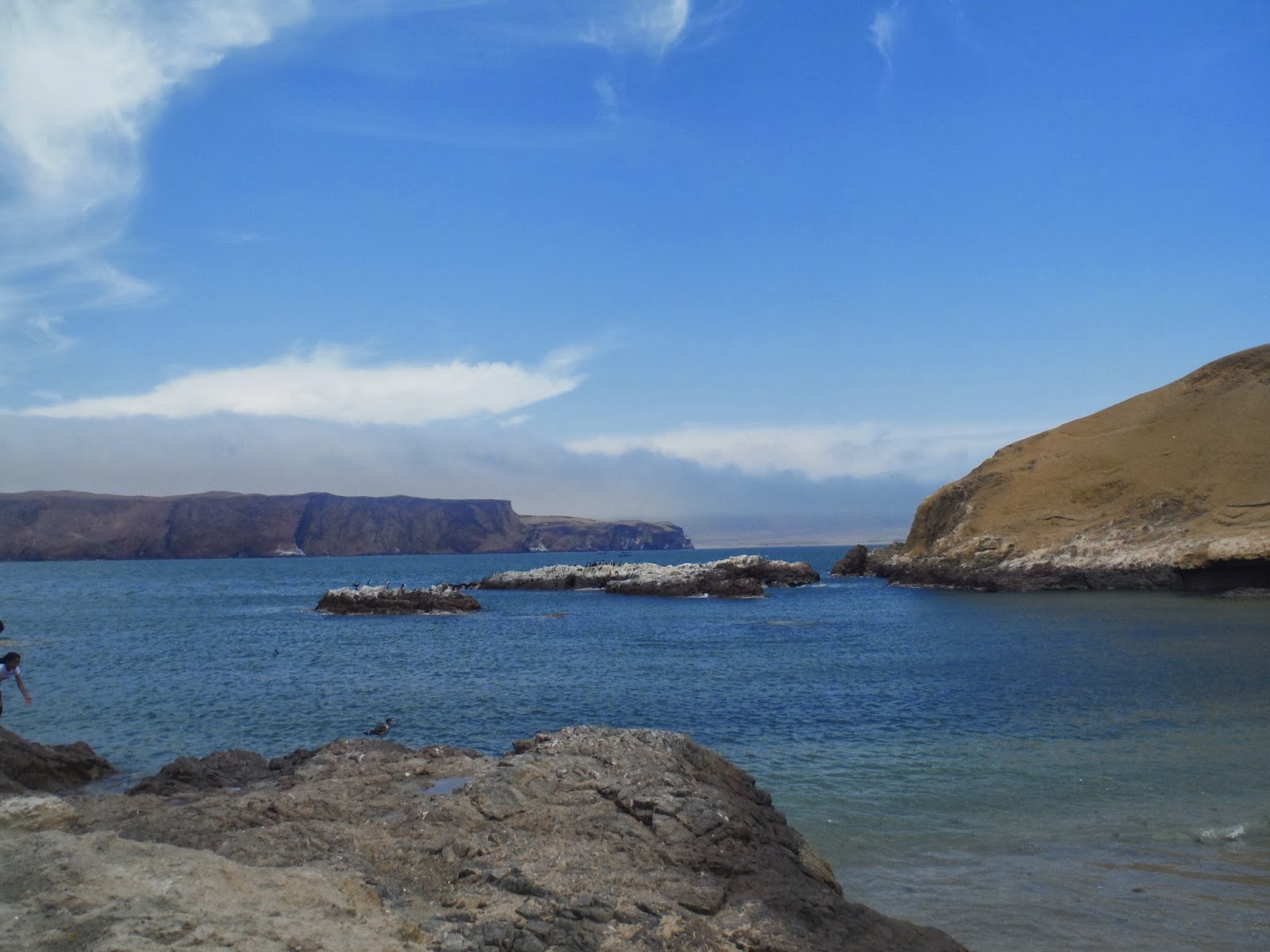
We then travelled by bus to the Paracas national reserve. So many different landscapes exist here, from misty snow capped mountains to arid desert and lush beaches. The desertscapes were really weird, they used to be under water thousands of years ago so there are still smooth wave enduced ripples and reminants of shells scattered around. We swam in the choppy waters of a beautiful beach surrounded by the most incredible scenery of mountains, caves, pengins, pelicans and fishing boats with compresser divers looking for octopus.
Friday, 3 January 2014
Lima
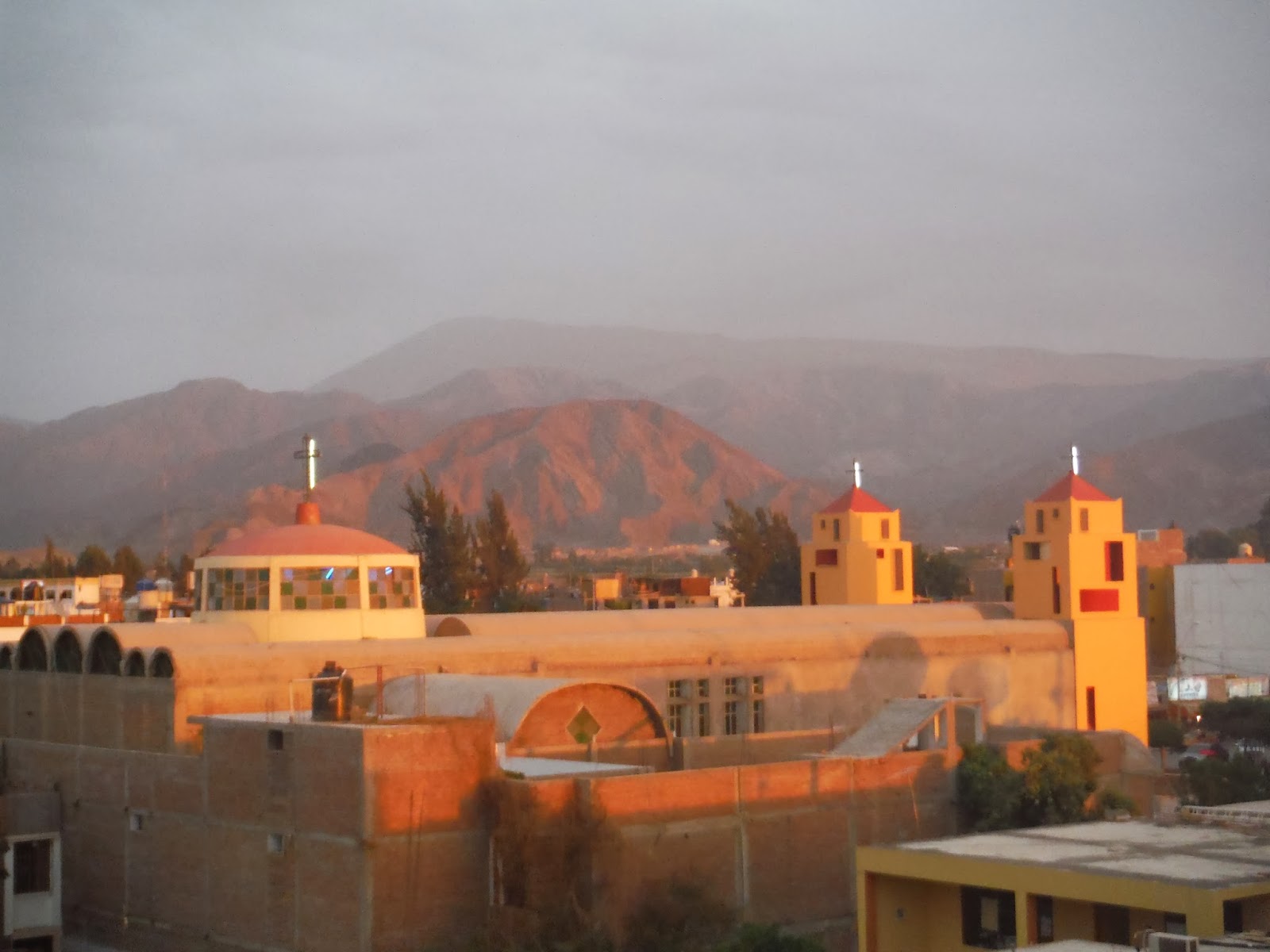
Despite the lack of hype around Lima and the fact that it is largely classed as a mere stop off point between places for travellers, we were surprised at how beautiful many of its crevices were. We stayed in Lima Central in an old 19th century mansion converted into a decently priced hostel. The centre was a bustling hub of activity and was a real mix of both middle class and much poorer locals. Many of its buildings were neo classical in style and covered in a thick layer of dirt from the ever-present inner city smog. Mariflores, in the south was quite different and the Peruvian equivalent of London's Primrose Hill. There was a stone beach with a dainty pier which had been cordoned off and turned into a flashy restaurant for Lima's elite. Despite being excited by pretty much anything given that we had just arrived, we still sought to find a more local friendly down to earth vibe. Barranco, a little further south offered that and more. At night it was crowded with locals drinking on the streets, stalls with a display of intricate crafts and a labyrinth of inviting latin jazz clubs and seafood restaurants. Viewable from a bridge there was a glistening valley dotted with the most aesthetically alluring cubby holes to drink and eat with the most beautiful views. We managed to find our way down there and had a feast of local fish stews and Pisco sours. After a few days in Lima we are now more than ready to begin our explorations of rural Peru.
Subscribe to:
Posts (Atom)